August 26, 20265 min read
Learn the 10 warning signs commercial flat roofing is failing, from ponding water to rising energy bills, and when to call a commercial roof replacement expert.
By Berg General ContractorsAugust 26, 20265 min read
01
Top 10 Signs Your Commercial Flat Roof Needs Replacement in 2026
A commercial flat roof rarely fails all at once. It fails in stages, and most of those stages are visible long before a leak forces an emergency call. Property managers who catch the early signs save money. Those who wait for a ceiling tile to fall usually pay for it twice: once in emergency repair costs, and again in the business disruption that follows.
If you manage a warehouse, retail center, office building, or industrial facility in Florida, your commercial flat roof is one of the most weather-exposed assets on the property. Between intense UV exposure, seasonal hurricanes, and standing summer rain, Florida roofs age faster than the national average. Knowing what to look for in 2026 can mean the difference between a planned commercial roof replacement and an unplanned shutdown.
Below are the ten warning signs that matter most, plus guidance on what to do about each one.
02
Why Commercial Flat Roofs Fail Differently Than Sloped Roofs
A flat or low-slope roof does not shed water the way a pitched residential roof does. Instead, it relies on a membrane, drainage system, and slight tapering to move water off the building over time. That design works well when everything is intact, but it also means small defects — a pinhole seam, a clogged drain, a worn flashing detail — turn into standing water and slow water intrusion rather than an obvious, immediate leak. By the time damage becomes visible indoors, the underlying membrane and insulation have often been compromised for months.
This is why commercial flat roofing systems, whether TPO, EPDM, or modified bitumen, need a different inspection mindset than shingles. You are not just looking for missing pieces. You are looking for signs of slow, cumulative failure.
03
Sign 1: Persistent Ponding Water
Some ponding after a heavy storm is normal on a flat roof and should drain within 24 to 48 hours. Water that sits longer than that is a problem. Standing water adds significant weight to the structure, accelerates membrane breakdown through prolonged UV and moisture exposure, and creates the conditions for algae, debris buildup, and eventual leaks.
If certain areas of your roof pond after every rain, the issue is usually a drainage design flaw or structural settling, not something a patch will fix. Persistent ponding is one of the clearest indicators that a full commercial flat roofing system evaluation is overdue.
04
Sign 2: Widespread Cracking and Alligatoring
Fine, scattered cracking across the membrane surface — sometimes called alligatoring because of its resemblance to reptile skin — signals that the membrane has become brittle from years of UV exposure and thermal cycling. A crack here or there can often be repaired. Cracking that covers large sections of the roof means the material itself has lost its flexibility and its ability to expand and contract with temperature swings, which is exactly what a flat roof membrane needs to do to survive Florida's heat.
05
Sign 3: Blistering or Bubbling Membrane
Blisters form when moisture or trapped air gets between roofing layers and expands, usually from heat. Left alone, blisters eventually rupture, exposing the layers beneath to water. Scattered small blisters may be addressed with targeted repair, but widespread blistering usually means moisture has already worked its way into the roofing system and a commercial roof repair crew will find more damage underneath than what is visible on the surface.
06
Sign 4: Interior Water Stains or Active Leaks
By the time water shows up on a ceiling tile, drywall, or interior wall, it has usually traveled some distance from the actual point of entry on the roof. Interior staining is one of the most reliable signs that the roofing system has been compromised, even if the exterior still looks reasonable from ground level. A single leak might be a repair. Multiple leak points, or leaks that reappear after being patched, point toward a membrane that is failing broadly rather than in one isolated spot.
07
Sign 5: Your Roof Is Past Its Expected Service Life
Most commercial flat roofing systems carry an expected service life in a defined range depending on material. Built-up roofing and modified bitumen typically last 15 to 20 years, while TPO and EPDM single-ply membranes often reach 20 to 25 years with proper maintenance. If your roof is approaching or past that window, age alone increases the likelihood of failure even without obvious visible damage. An aging roof combined with any of the signs above is a strong case for planning a commercial roof replacement rather than continuing to invest in repairs on borrowed time.
| Material | Expected Lifespan |
|---|---|
| Built-Up Roofing (BUR) | 15–20 years |
| Modified Bitumen | 15–20 years |
| TPO Single-Ply | 20–25 years |
| EPDM Single-Ply | 20–25 years |
08
Sign 6: Rising Energy Bills Tied to the Roof
A roofing membrane and its insulation layer play a direct role in a building's thermal performance. As membranes degrade and insulation becomes waterlogged or compressed, HVAC systems work harder to maintain interior temperatures. If cooling costs have climbed year over year without a clear operational explanation, a failing roof deserves a look. Waterlogged insulation in particular loses most of its R-value, which quietly drives up utility costs long before a leak ever appears.
09
Sign 7: Frequent, Recurring Repairs
Occasional maintenance is expected. A pattern of repeat service calls to the same sections of roof is not. Once a facility is calling out a roofing crew multiple times a year for patches, the math usually favors replacement. At that point, the cumulative cost of ongoing repairs, plus the business disruption each visit causes, often exceeds what a planned replacement would have cost.
10
Sign 8: Visible Membrane Shrinkage or Seam Failure
Single-ply membranes like TPO and EPDM are installed with seams that are heat-welded or adhered together. Over time, membranes can shrink, which pulls at those seams and at roof penetrations like vents, curbs, and HVAC units. Visible gaps at seams, pulled flashing, or a membrane that looks stretched taut at the edges are structural warning signs, not cosmetic ones. Seam failure is one of the most common entry points for water on an aging commercial roof.
11
Sign 9: Sagging or Soft Spots in the Deck
Walk the roof — or have a professional do it — and pay attention to how it feels underfoot. Soft, spongy areas or visible sagging usually mean the roof deck itself has absorbed water and begun to deteriorate. This is more serious than membrane-level damage because it affects the structural substrate the entire roofing system depends on. A soft deck is not a repair-and-move-on situation. It typically requires deck replacement as part of a full re-roofing or replacement project.
12
Sign 10: Your Roof Fails an Insurance or Compliance Inspection
Insurance carriers and building code officials increasingly require documented roof inspections, particularly in Florida where wind and storm resilience standards have tightened. If a recent inspection flagged your roof for age, wear, or non-compliance with current code, that finding carries real financial weight. It can affect insurability, premiums, and in some cases financing or lease terms. A roof inspection and compliance report from a licensed contractor gives you documentation either way, and it is the fastest way to know where you actually stand before renewal season.
13
Common Mistakes Property Owners Make
Avoiding these missteps can be the difference between a manageable repair and a costly emergency replacement.
- Treating every leak as an isolated repair. Repeated patching without investigating the broader membrane condition often masks a larger problem until it becomes an emergency.
- Ignoring ponding water because it "always drains eventually." Slow drainage compounds damage every time it happens, not just the first time.
- Delaying replacement to stretch the budget one more fiscal year. Roofs rarely fail on a convenient timeline, and emergency replacement costs more than a planned project.
- Assuming a roof that looks fine from the ground is fine. Most of the warning signs are only visible from the roof surface itself, not from the parking lot.
- Skipping documentation. Without inspection records, it is difficult to make an insurance claim or prove a roof was properly maintained.
14
Pro Tips for Extending What Life Your Roof Has Left
Even a roof showing early signs of wear can benefit from proactive maintenance. These steps help protect your investment while you plan your next move.
- Schedule inspections twice a year, and always after a major storm, not just once annually.
- Keep drains, scuppers, and gutters clear of debris year-round, since clogged drainage is one of the most preventable causes of ponding.
- Address small membrane damage immediately rather than waiting for the next scheduled visit.
- Keep a written maintenance log. It supports warranty claims, insurance documentation, and future budgeting decisions.
- Get a professional opinion before assuming a repair will hold. What looks like a small fix on the surface can be a symptom of a larger issue underneath.
“In our experience working on commercial properties across Florida, the roofs that fail catastrophically are almost never the ones that had regular inspections. They're the ones where a small issue got patched three or four times over several years instead of being properly evaluated. By the time we're called in for an emergency, we're usually looking at a roof that gave clear warning signs a year or two earlier.”
15
Repair, Re-Roof, or Full Replacement?
Not every issue on this list means the entire roof needs to come off. A single sign, caught early, is often addressed through targeted commercial roof repair. Several signs appearing together, or a roof nearing the end of its expected service life, usually points toward commercial re-roofing, where a new membrane is installed over the existing system if it qualifies. When the deck, insulation, or drainage design itself has failed, a full commercial roof replacement is the option that actually resolves the underlying problem instead of buying a few more years.
For buildings that are being constructed from the ground up, working with new construction roofing contractors from the start ensures the roofing system, drainage plan, and material selection — including options like commercial metal roofing for certain building types — are matched to the property's long-term needs rather than retrofitted later.
The right call depends on the roof's age, the extent of damage, and the building's budget cycle. That is a decision best made with an inspection in hand, not a guess from the ground.
| Scenario | Recommended Action |
|---|---|
| Single isolated issue, roof under 15 years old | Targeted repair |
| Multiple signs present, roof 15–20 years old | Professional evaluation, possible re-roof |
| Deck or insulation compromised | Full replacement |
| New construction project | New construction roofing contractor |
16
Get a Professional Roof Assessment Before Small Problems Get Expensive
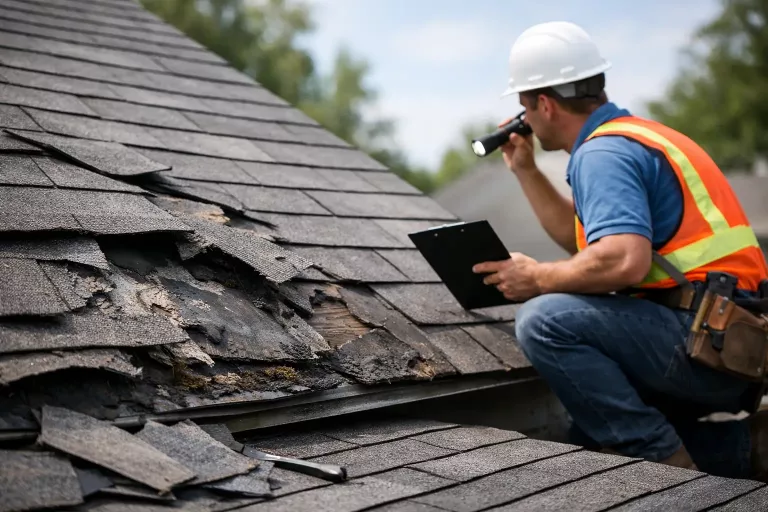
If your building is showing even one or two of these signs, do not wait for the next storm to find out how serious it is. A short inspection today can tell you whether you are looking at a targeted repair, a re-roof, or a full replacement — and it puts a documented report in your hands for insurance and compliance purposes either way.
- A team member walks through your roof's age, history, and any issues you have already noticed
- We schedule an on-site inspection at a time that works around your business hours
- You receive a clear, written assessment with photos and a straightforward repair-vs-replace recommendation — no pressure, no guesswork
- If replacement is the right call, we provide a detailed proposal with materials, timeline, and cost before any work begins
17
Frequently Asked Questions
| Question | Answer |
|---|---|
| How long does a commercial flat roof typically last? | Most systems last 15 to 25 years depending on the material, with single-ply membranes like TPO and EPDM generally on the longer end when properly maintained. |
| Is it cheaper to repair or replace a commercial flat roof? | Repair is cheaper upfront for isolated issues. Once a roof needs frequent, recurring repairs, replacement is usually more cost-effective over a 5 to 10 year horizon. |
| Can a commercial flat roof be replaced without shutting down business operations? | In most cases, yes. Commercial roof replacement is typically phased and scheduled to minimize disruption to daily operations, especially for retail and office properties. |
| What is the difference between re-roofing and full roof replacement? | Re-roofing installs a new membrane over an existing, structurally sound roof system. Full replacement removes the roof down to the deck and rebuilds it, which is necessary when the deck or insulation has been compromised. |
| Does insurance cover commercial roof replacement? | Coverage depends on the cause of damage and your policy terms. Storm and wind damage are often covered, while replacement due to age or lack of maintenance typically is not. A documented inspection report helps support any claim. |