How is TPO roofing installed on commercial buildings in Florida? See the steps, methods, codes and mistakes to avoid. Book your roof inspection today.
Understanding TPO roofing installation before you sign a contract is the best way to protect a commercial building from leaks, wind damage and surprise change orders. A TPO roof is only as good as its seams, flashings and attachment, and all three are decided on installation day. This guide walks through the materials, the step-by-step process, the installation methods and the Florida rules your crew should follow.
What Is TPO Roofing? A Look at TPO Roofing Material for Commercial Buildings
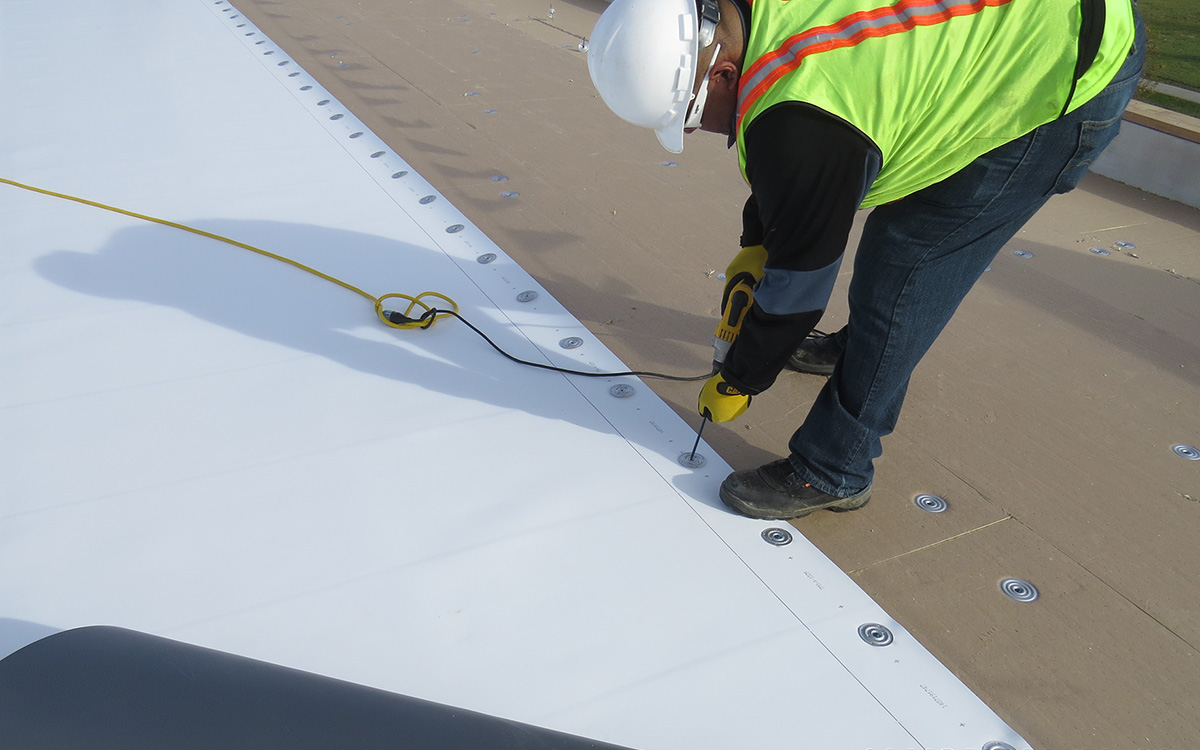
TPO (thermoplastic polyolefin) roofing is a single-ply membrane made for flat and low-slope roofs. The sheets arrive in rolls, are fastened or bonded to the roof and are joined with hot-air-welded seams that form one continuous waterproof surface. The TPO roofing material most commercial owners choose is white, which reflects sunlight and helps reduce rooftop heat. Key traits include:
Heat-welded seams instead of glue or tape
A white reflective surface that supports cooling efficiency
Common thicknesses of 45, 60 and 80 mil
Polyester reinforcement for strength
Light weight compared with ballasted or multi-layer systems
If you are weighing asphalt-based options, see our modified bitumen roofing page. For broader context on flat systems, visit our commercial flat roofing overview.
Why Commercial TPO Roof Installation Suits Florida Buildings
Florida roofs face strong UV, daily humidity, heavy rain and hurricane-season wind. A white TPO membrane helps with heat, welded seams resist wind-driven rain and the system can be installed relatively quickly on large roofs. Results still depend on the crew. The best TPO roofing contractors Florida owners can hire treat installation as a quality process, not a race.
TPO Roofing Installation Step by Step: How Crews Install a TPO Membrane
Here is how a professional TPO membrane installation typically unfolds:
Inspect and permit: a moisture scan, deck check and permit application come first.
Prepare the roof: crews tear off or prepare the existing system, repair the deck and clean the surface.
Install insulation and cover board: these are attached to meet the wind-uplift design.
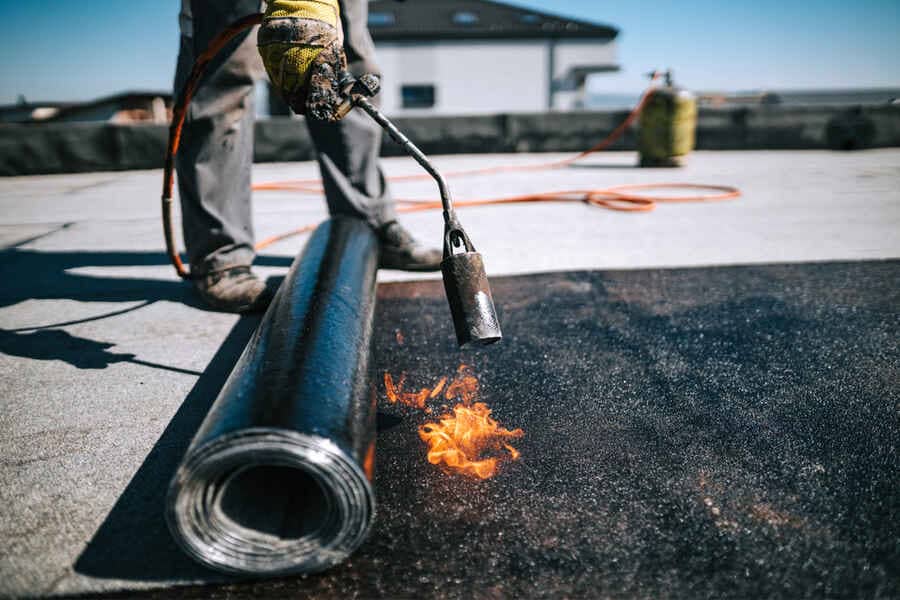
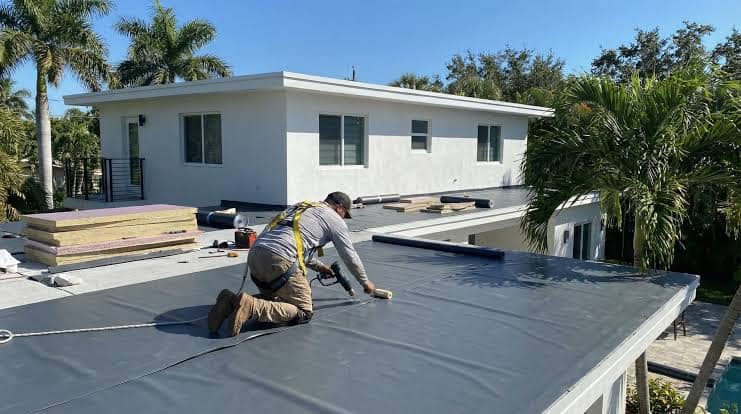
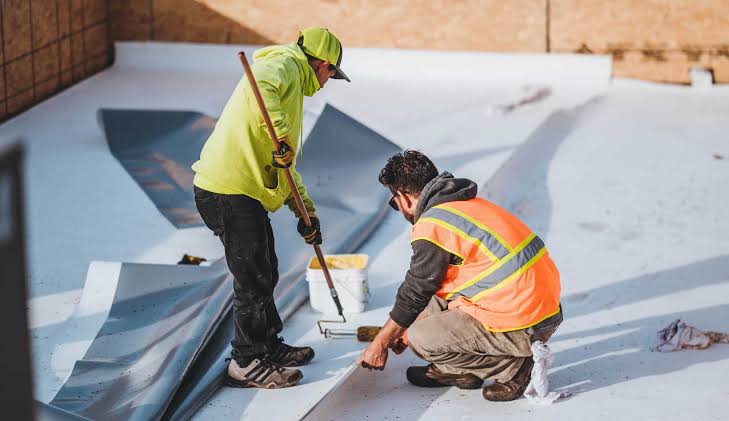
Roll out the TPO membrane: sheets are positioned, relaxed and attached by the chosen method.
Weld the seams: hot-air welders fuse the overlaps, and the crew probe-tests the welds.
Detail the flashings: walls, curbs, drains, vents and pipes get custom TPO flashings and boots.
Final inspection and closeout: the team checks the work, cleans the site and prepares warranty paperwork.
TPO Membrane Installation Methods Compared
The attachment method affects wind performance, schedule and cost. This table summarizes the main options.
| Method | How it is attached | Best for | Watch out for |
|---|---|---|---|
| Mechanically attached | Fasteners and plates secure the membrane, then welds cover them | Large, open roofs and faster schedules | Needs a fastening pattern engineered for local wind uplift |
| Fully adhered | Bonding adhesive glues the membrane to the substrate | High-wind areas and complex roof shapes | Needs a dry, clean surface and careful weather timing |
| Ballasted | Stone or pavers hold the membrane in place | Structures that can carry the extra weight | Heavy, and often impractical in high-wind zones |
What to Expect Before, During and After Commercial TPO Roof Installation
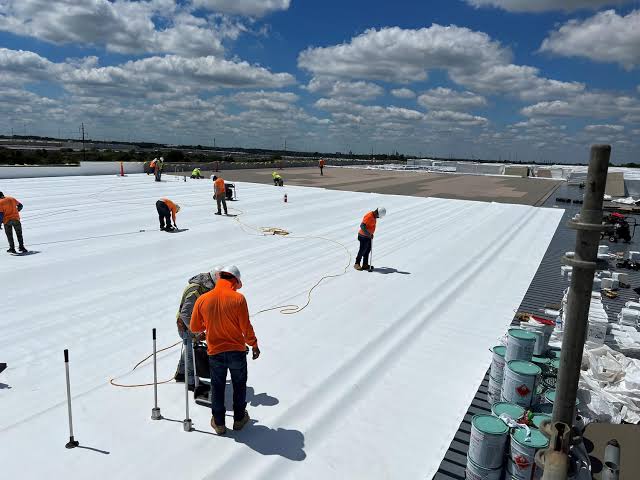
Before the Crew Arrives
A documented inspection tells you whether you need a full tear-off or a recover. Our roof inspections and compliance reports show what that paperwork should include, and our commercial roof replacement page explains how scope is decided.
While the Work Is Underway
Expect daily progress updates. Afternoon storms can interrupt welding, so a careful crew seals every tie-in at the end of each day to keep water out of the building.
After the Last Seam Is Welded
Walk the roof with your contractor, review seam-probe results and photos, and collect the warranty documents before the final payment.
Pro tip: Ask for photos of insulation, fastening and flashings before they are covered, so you have a record if a question comes up later.
Florida Codes and Permits for TPO Roofing Installation
Every commercial TPO roofing installation in South Florida must meet Florida Building Code wind requirements. Broward and Miami-Dade sit inside the High-Velocity Hurricane Zone, so materials and attachment methods need product approval for that zone. Palm Beach County has its own permitting and wind-load rules. Ask for the permit, the design wind speed and the approved roof assembly in writing before work starts.
Common TPO Roofing Installation Mistakes That Lead to Leaks
Most problems come from rushed or poorly supervised work:
Seams that were poorly welded or never probe-tested
Skipping moisture testing and trapping wet insulation
Using a fastening pattern that does not match local wind loads
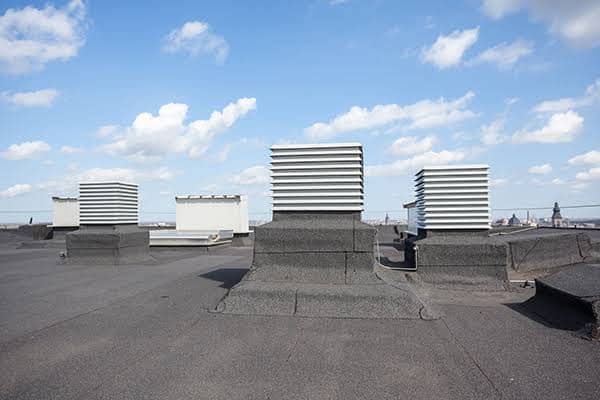
Weak flashings at curbs, drains and parapets
Installing over a wet or dirty surface
Expert insight: In our view, most TPO leaks trace back to flashing and seam details, not the open field of the membrane.
How to Choose TPO Roofing Contractors in Florida for Your Installation
The crew matters as much as the membrane. When you compare bids, look for:
An active Florida roofing contractor license and proof of insurance
Manufacturer certification for TPO systems
Recent commercial TPO projects and references you can call
An itemized written scope with the same inspection behind every bid
For a deeper checklist, read our guide to choosing TPO roofing contractors in South Florida.
Why Property Owners Choose Berg General Contractors for TPO Roofing Installation
Berg General Contractors provides TPO roofing installation, replacement and repair for commercial properties across South Florida. We focus on honest recommendations and clear communication from the first inspection to the final walkthrough. With us, you can expect:
A roof inspection before any price is quoted
A written scope that makes bids easy to compare
Plain-language guidance on repair, recover and replacement options
Help understanding your coverage through our roof warranty services
Book Your TPO Roofing Installation Consultation With Berg General Contractors
Planning a new roof or comparing installation bids? Berg General Contractors will inspect your building, explain the right TPO membrane installation method in plain language and give you a written scope you can compare against any other bid. Whether you need a full replacement or a recovery, our team is ready to protect your property before the next storm.
Book Now and schedule your commercial roof inspection today.