August 14, 20266 min read
Roof leaking right now? Learn exactly what to do in a roof leak emergency, plus how Berg General Contractors' roof leak repair services protect Florida homes fast.
By Berg General ContractorsAugust 14, 20266 min read
01
Emergency Roof Leak Repair: What to Do When Your Roof Starts Leaking
Water dripping through a ceiling at 2 a.m. has a way of turning even a calm homeowner into someone frantically searching for roof leak repair services with a bucket in one hand and a flashlight in the other. If that's you right now, take a breath. A leaking roof is stressful, but the damage it causes depends far more on what you do in the next hour than on the leak itself. This guide walks through what to do when your roof starts leaking, how to tell a manageable drip from a genuine emergency, and when it's time to stop troubleshooting and call in a licensed roofing contractor.
02
Why Roof Leaks Turn Into Emergencies Fast
A roof leak rarely stays small. Florida's combination of intense afternoon storms, high humidity, and hurricane-season wind gusts means a pinhole opening in your roofing system can pull in gallons of water during a single downpour. Once water gets past the roofing membrane or underlayment, it travels along rafters, soaks insulation, and finds the path of least resistance into your attic, walls, and ceilings. A single inch of rain falling on an average 3,000-square-foot roof adds up to roughly 1,870 gallons of water — and during a Florida thunderstorm, several inches can fall in under an hour. When flashing, underlayment, or drainage is compromised, that volume of water has nowhere to go but into your attic and ceiling, often within the same storm. The longer water sits, the more expensive the fix becomes. What starts as a leaking roof repair can turn into replacing insulation, drywall, electrical wiring, and in severe cases, structural framing. That's why your response in the first 30 minutes matters so much.
03
What to Do in a Roof Leak Emergency: Your First 30 Minutes
When water starts coming through, working through a clear sequence keeps damage contained until help arrives.
- Contain the water. Place buckets, trash cans, or towels under the drip. If water is pooling on the ceiling and visible as a bulge, puncture the center with a screwdriver to release it in a controlled spot rather than letting it collapse.
- Protect your belongings. Move furniture, electronics, and anything valuable away from the affected area.
- Cut power if water is near outlets or fixtures. Water and electricity are a dangerous combination. If the leak is near a light fixture or outlet, shut off power to that circuit at the breaker.
- Document everything. Take photos and short videos of the water damage, the ceiling, and any visible roof damage from the ground. This matters for your insurance claim later.
- Check the attic if it's safe to do so. A flashlight scan of the attic can help you spot the general area of intrusion, but don't walk on wet insulation or unstable decking.
- Call a licensed roofer. Once the immediate water is managed, contact a roof leak repair specialist to diagnose the source and stop the leak at the roof itself, not just the ceiling.
“The homeowners who fare best in an emergency are the ones who focus on containment first and diagnosis second. Chasing the leak on the roof in the middle of a storm almost always makes things worse.”
04
Finding the Source: Why the Leak Rarely Shows Up Where the Damage Starts
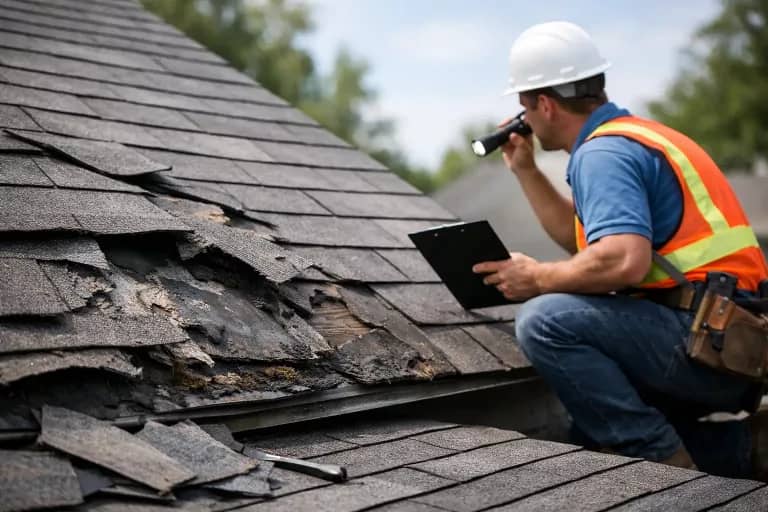
One of the more frustrating realities of roof leaks is that water doesn't travel straight down. It follows rafters, sheathing seams, and insulation batts, often surfacing on your ceiling several feet from where it actually entered the roof. This is why homeowners frequently patch the wrong spot, only to see the stain return after the next storm. A professional inspection traces the water path from the stain back to its actual source — a step most DIY fixes skip entirely.
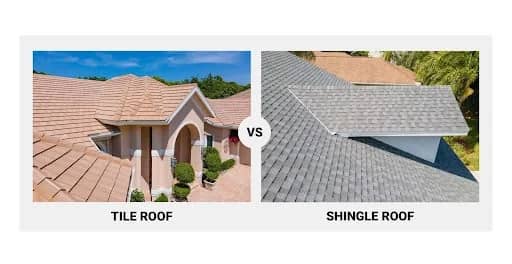
- Cracked or lifted shingles and tiles
- Deteriorated flashing around chimneys, skylights, and vent pipes
- Clogged or damaged gutters causing water backup under the roof edge
- Aging pipe boots and pitch pans
- Wind-damaged ridge caps after a storm
- Ponding water on low-slope or flat roof sections
05
DIY Temporary Fixes vs. When to Call a Professional
There's a real difference between a stopgap measure that buys you time and an actual repair. Understanding that difference keeps you safe and keeps your roof warranty intact.
| Situation | Safe DIY Step | When to Call a Pro |
|---|---|---|
| Small ceiling drip, storm still active | Contain water with a bucket, avoid the roof entirely | Once the storm passes, schedule an inspection immediately |
| Visible missing shingle from the ground | Take photos for documentation | Don't climb up — roof repair requires proper fall protection and material matching |
| Water stain with no active drip | Monitor and photograph for a few days | If it grows or darkens, treat it as an active leak |
| Large ceiling bulge or sagging | Puncture to relieve pressure, evacuate the room if severe | Immediately — this can indicate structural water saturation |
| Storm or hurricane damage | Tarp visible openings only if it's safe and the storm has fully passed | Always — storm damage often hides secondary issues under the surface |
06
What Emergency Roof Repair Actually Involves
When a licensed contractor responds to an emergency roof leak, the process follows a structured path rather than a rushed patch job.
- Rapid response and tarping. For active leaks, a temporary waterproof tarp or membrane is installed to stop further water intrusion the same day.
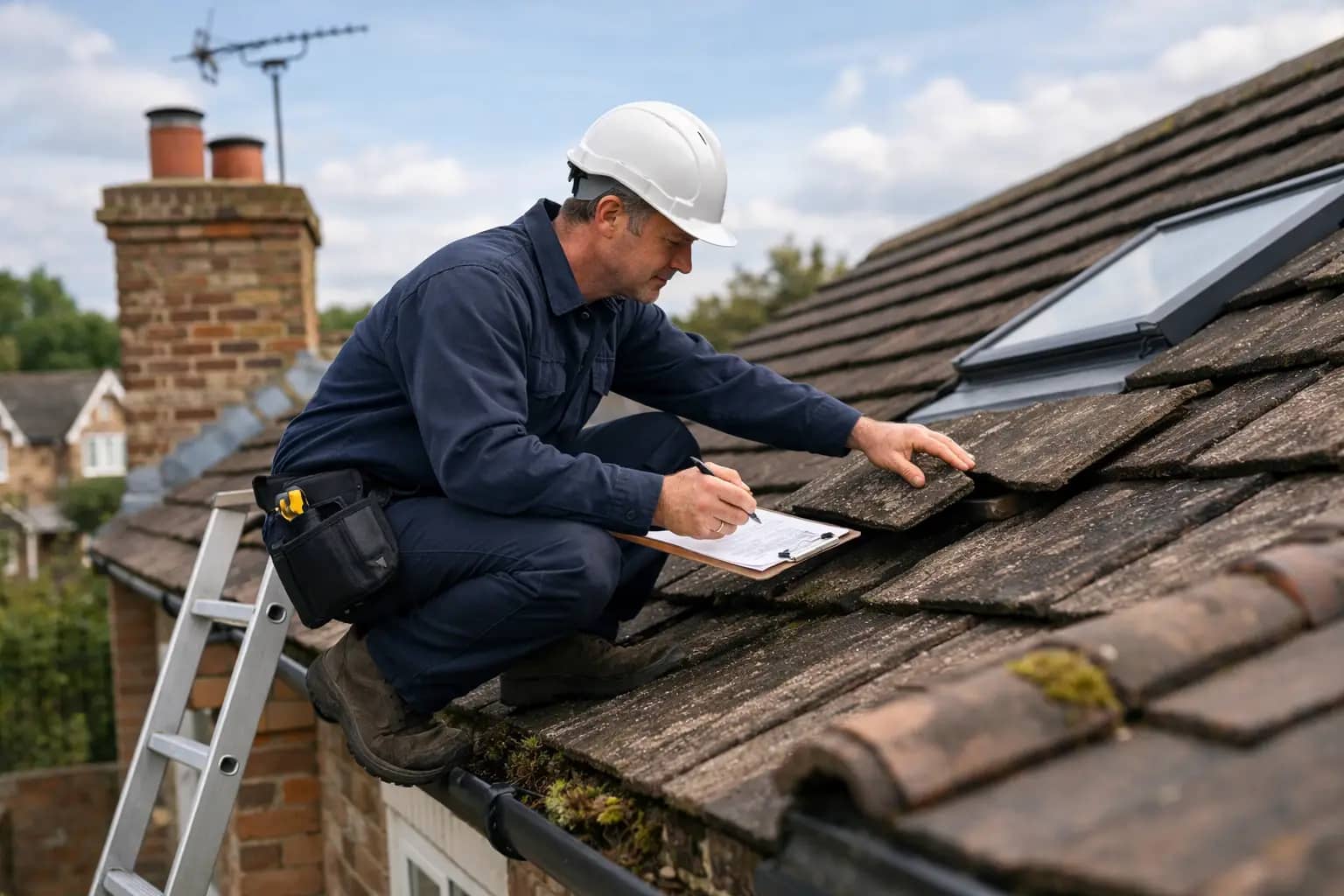
- Full diagnostic inspection. The roofing crew traces the leak path and checks flashing, underlayment, and surrounding sections for related weak points.
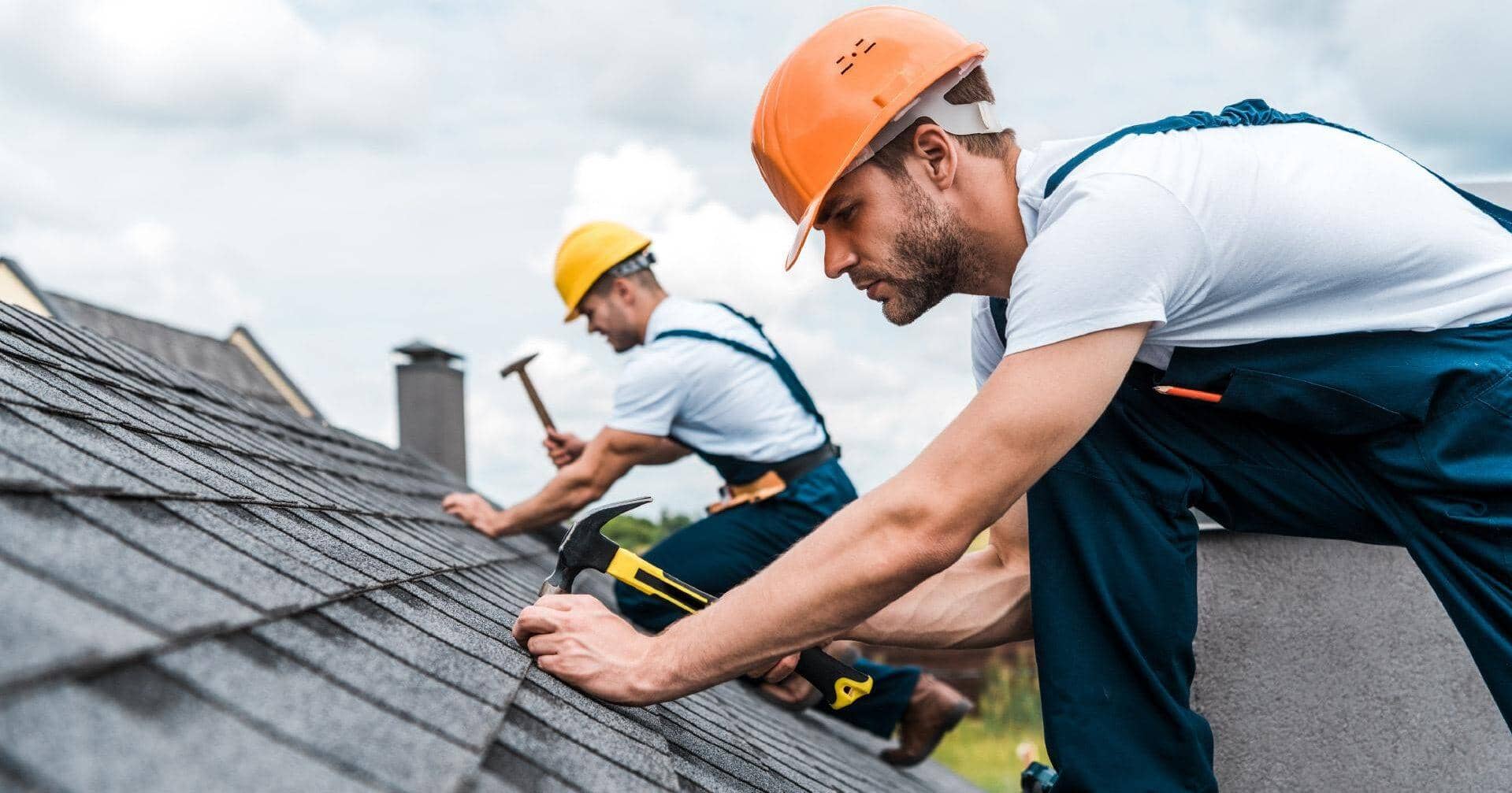
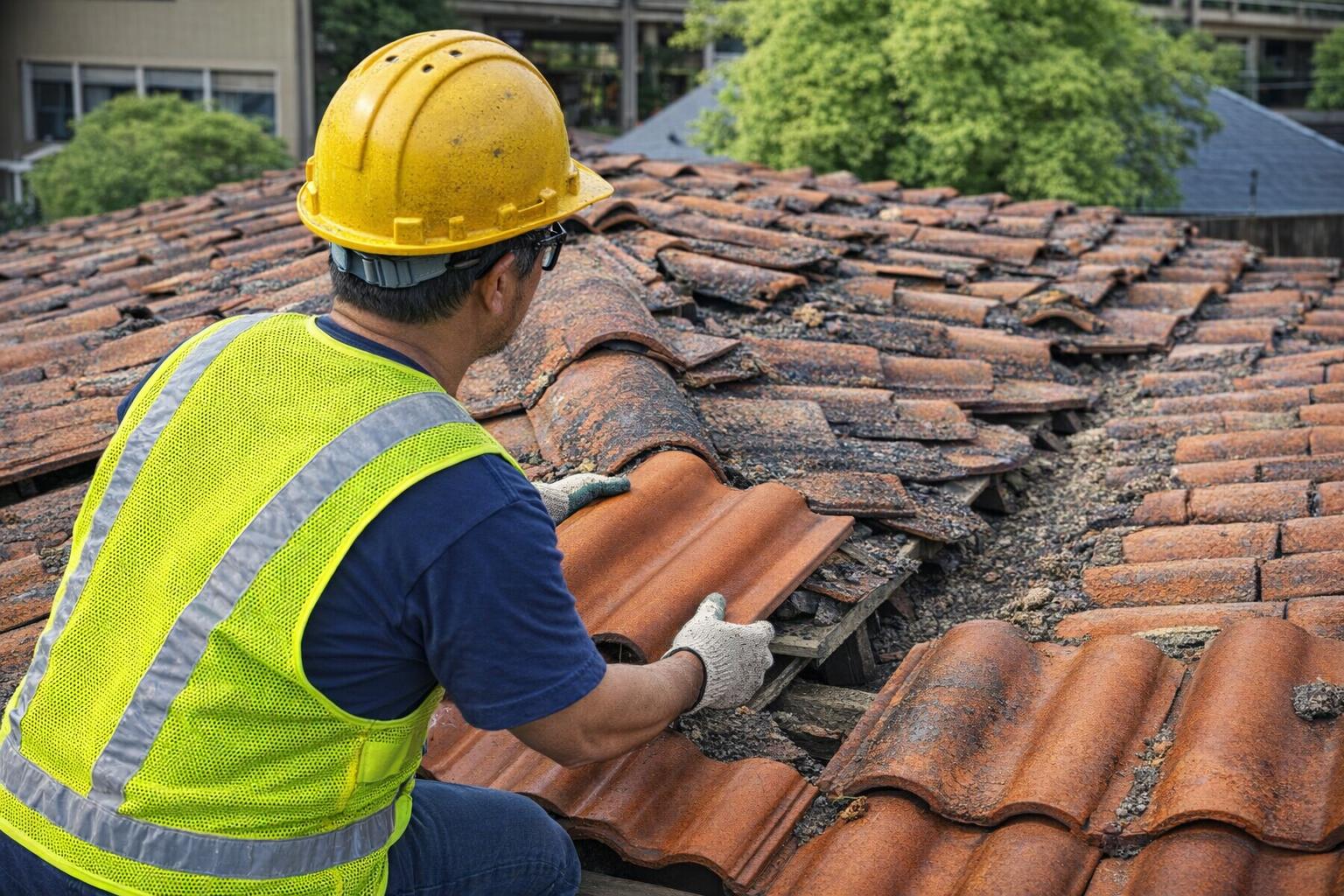
- Targeted repair. Depending on the cause, this might mean replacing damaged shingles or tiles, resealing flashing, repairing pipe boots, or patching membrane sections.
- Interior coordination. Reputable contractors can point you toward water mitigation and drywall specialists if interior damage occurred.
- Documentation for insurance. A detailed report and photos support your claim if the damage qualifies for coverage.
07
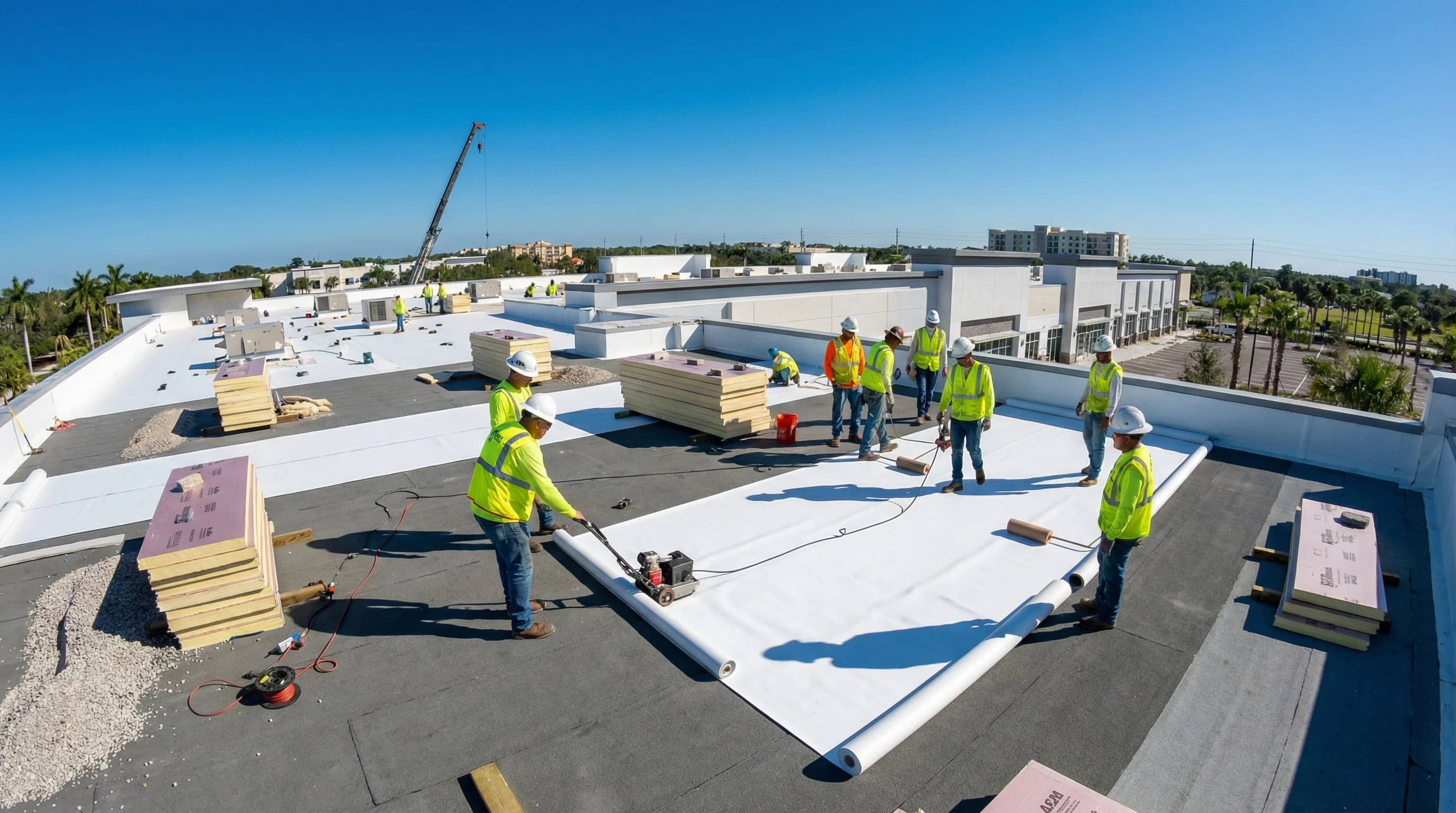
Flat Roofs and Leaks: A Different Kind of Emergency
Flat and low-slope roofs behave differently than pitched shingle or tile roofs, and that changes how leaks develop. Without gravity pulling water quickly off the surface, flat roofs are prone to ponding water, which puts sustained pressure on seams and membrane layers long after a storm ends. Because flat roofing systems rely on a continuous waterproof membrane, even a small puncture can allow water to spread laterally under the surface before it ever shows up as a ceiling stain.
- Membrane seams that have separated or blistered under heat
- Ponding water breaking down the surface coating over time
- Improper or aging drainage systems
- Punctures from foot traffic or HVAC equipment installation
08
Common Mistakes Homeowners Make During a Leak
Avoiding these mistakes can mean the difference between a contained repair and a much more costly restoration.
- Waiting to see if it stops on its own. Leaks rarely self-resolve, and delaying inspection allows water to spread further into insulation and framing.
- Applying roof sealant from the top without knowing the source. This often traps moisture rather than stopping it.
- Skipping photo documentation. Insurance adjusters rely heavily on timestamped evidence of the damage progression.
- Climbing onto a wet roof. This is one of the leading causes of fall injuries during storm season.
- Hiring the first storm-chasing contractor who knocks on the door. Verify licensing and local presence before signing anything.
09
Insurance, Documentation, and Getting Your Claim Right
Most homeowner's insurance policies in Florida cover sudden and accidental roof damage — such as storm or wind damage — but typically exclude damage from long-term neglect or lack of maintenance. That distinction is why documentation matters so much.
- Photograph the damage as soon as it's safely possible, both interior and exterior
- Keep receipts for any emergency mitigation steps, like tarping or water extraction
- Request a written inspection report from your roofing contractor
- Avoid making permanent repairs before the adjuster has seen the damage, unless it's necessary to prevent further loss
“A roofing contractor experienced with insurance claim assessments can walk the property alongside your adjuster and make sure legitimate storm damage doesn't get underestimated.”
10
When a Leak Repair Turns Into a Roof Replacement Conversation
Not every leak means you need a new roof, but certain signs point toward replacement rather than another round of patching. In our experience working on Florida roofs, a roof that needs its third leak repair in two years is almost always signaling that the underlying materials have reached the end of their service life — even if the shingles still look intact from the ground. At that point, a full roof replacement is usually the more cost-effective path over continuing to chase individual leaks.
- Multiple leaks appearing in different areas of the roof within the same season
- A roof already past 15 to 20 years old (for shingle) or its expected service life
- Widespread granule loss, curling shingles, or soft spots across large sections
- Repeated repairs to the same area without lasting results
11
Preventing the Next Emergency
Once the immediate leak is resolved, a few maintenance habits significantly reduce the odds of a repeat emergency. Routine roof inspections catch small vulnerabilities long before they become 2 a.m. emergencies.
- Schedule a professional roof inspection twice a year, and always after a major storm
- Keep gutters clear so water doesn't back up under roof edges
- Trim overhanging branches that drop debris or scrape roofing material
- Address minor issues like a lifted shingle or small crack before the next storm season
- Consider a preventive maintenance plan if your property has a history of leaks
12
Get Emergency Roof Leak Repair From Berg General Contractors Today
A leaking roof doesn't wait for business hours, and neither should your repair. Berg General Contractors is a licensed general contractor and roofing company serving homeowners across Florida, from Miami and Fort Lauderdale to Tampa, Orlando, and Jacksonville. If your roof is leaking right now, don't wait for a small drip to become structural damage. Our team responds fast, diagnoses the real source of the leak, and repairs it right the first time.
13
Frequently Asked Questions
14
What should I do first when I notice a roof leak?
Contain the water with buckets or towels, move valuables out of the way, and photograph the damage. Avoid going onto the roof, especially during active weather, and call a licensed roofing contractor once it's safe.
15
How much does emergency roof leak repair cost?
Costs vary based on the extent of damage, roof type, and materials. Emergency tarping and initial containment services are typically priced separately from the permanent repair. A licensed contractor can provide an estimate after inspecting the source.
16
Can I stay in my house during a roof leak repair?
In most cases, yes. Emergency roof repairs are typically completed from the exterior, though interior water damage repairs may require you to avoid the affected room until it's dry and safe.
17
Is roof leak repair covered by homeowners insurance?
Sudden damage from storms, wind, or falling debris is usually covered. Damage caused by long-term neglect or lack of maintenance is generally excluded. Documentation and a professional assessment help support your claim either way.
18
How can I tell if my roof leak is an emergency?
Active dripping, a sagging or bulging ceiling, water near electrical fixtures, or visible storm damage all qualify as emergencies that need same-day attention. A slow, isolated stain with no active water can typically wait for a scheduled inspection.